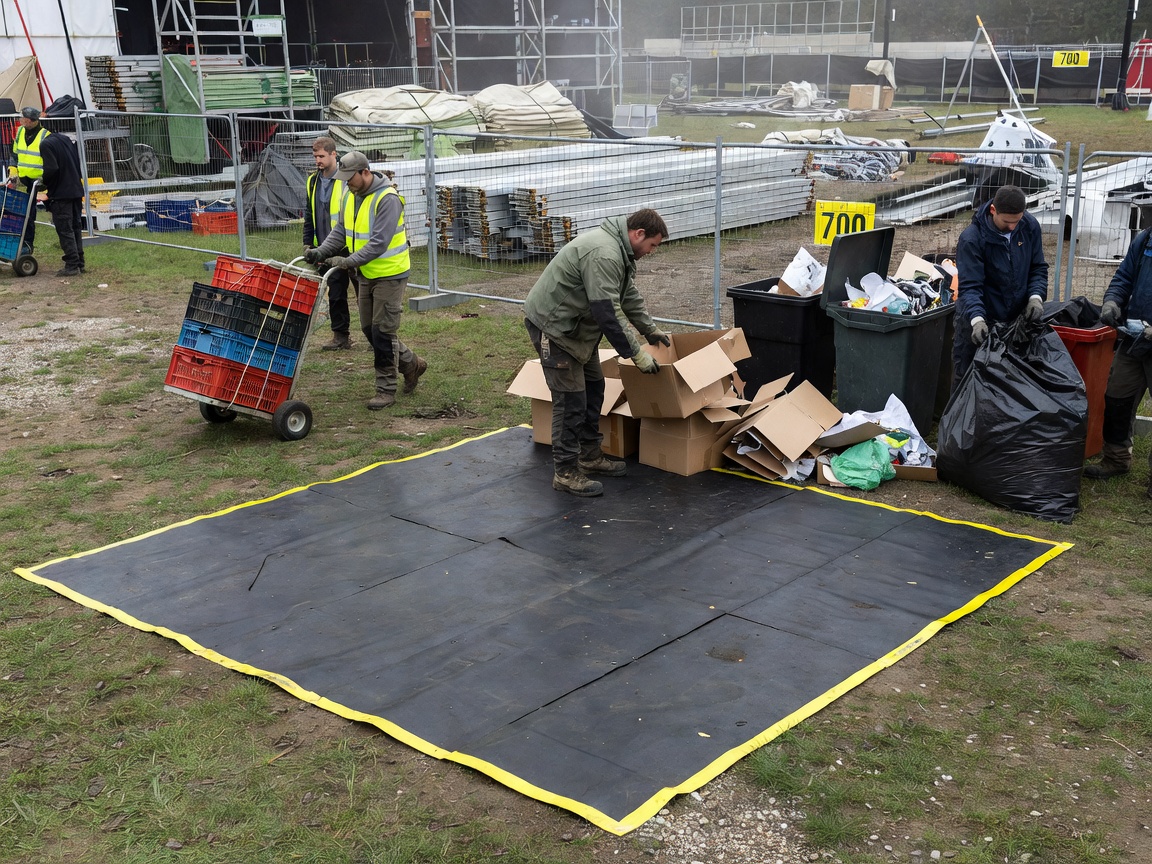
Sorting begins before material reaches a sorting area. Visitors, vendors and staff need a common understanding of the collection streams. The operating design should then show how those streams are checked, stored and transferred. Keep descriptions high level where material may be unknown, hazardous or subject to special requirements.
Separate at the source
Source separation means material is placed into an identified stream where it arises. It reduces ambiguity at the point of collection, but it depends on useful labels, suitable containers and timely attention. Review whether the chosen categories match the materials actually used by vendors and production teams.
Use stream names that staff can repeat. Avoid relying on colour alone. Include examples and exclusions where confusion is likely. If the same container serves different zones, make the difference visible in the local instruction.
Design the temporary sorting area
A sorting area needs a defined boundary, a layout that can be explained and sufficient space for controlled temporary storage. Mark incoming material, identified streams, residual material and records separately. Keep access managed. Do not mix public circulation with operational handling areas.
Storage before onward handling should use appropriate containers and documented procedures. Unknown substances, hazardous waste, medical waste and other special categories require qualified personnel, suitable containers and local requirements. Do not improvise treatment or dismantling.
Assign roles and checkpoints
Roles may include point checker, collection coordinator, sorting lead, record keeper and escalation contact. The exact structure depends on event scale and operating hours. Each role needs a clear handover. A short shift record can note time, zone, stream, issue and action without pretending to be an environmental measurement.
Contamination control is a repeated process. Check labels, container condition, stream consistency and storage status. Where the same error repeats, change the instruction or location rather than only correcting individual items.
Advantages and limitations
On-site sorting can improve visibility and help consolidate material categories. It requires space, trained staff, clear boundaries and a route onward. Source separation alone is simpler at public points but may leave more uncertainty in back-of-house handling. A combined system can work when responsibilities are explicit.
Key considerations
- Use consistent stream names across the event.
- Keep sorting areas separate from public movement.
- Define checks, handovers and escalation routes.
- Record operational exceptions and corrective actions.
- Use qualified personnel for special or unknown waste.
- Confirm onward routes before storing separated material.
Selection criteria
Choose a sorting model that matches available space, staff capability, material categories and local receiving requirements. Prefer clear boundaries and records over complex systems that cannot be supervised.
Review a sorting workflow
Outline the streams, staffing model and temporary site limits.
Plan an enquiry